
Respuesta directa
SMT assembly risk is not just a function of stencil design or reflow profiling; it is also a direct consequence of your supplier's financial trajectory and the contract terms you sign. A technically capable assembler with declining profit margins or a contract that shifts BOM liability onto you can destroy your project's timeline and budget faster than any tombstoning defect. You must evaluate profit trends and contract clauses with the same rigor as you evaluate solder paste coverage.
---
Why Profit Trends Are a Leading Indicator of Assembly Quality
A PCB assembler's profit margin is not just a financial metric; it is a proxy for their operational health and future capability. When margins are healthy, the company reinvests in capital equipment, operator training, and process control systems. When margins are thin or declining, the first cuts are usually invisible to a buyer until a defect escapes to the field.
The Link Between Margin and Maintenance
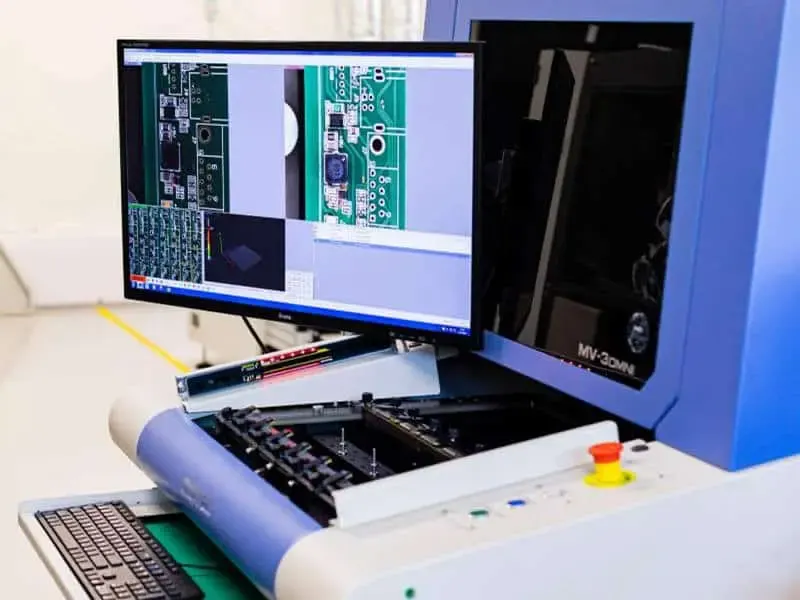
SMT lines are capital-intensive. A single high-end placement machine can cost hundreds of thousands of dollars, and a reflow oven with precise profiling capabilities is another significant investment. If an assembler is operating on a 3% net margin, they are not buying a new AOI system or upgrading their X-ray inspection for BGA voiding. They are deferring maintenance, extending the calibration cycle on their solder paste inspection (SPI) machines, and potentially reducing the frequency of first-article inspections.
Consider the cost structure. A typical EMS provider has fixed costs for facility, equipment depreciation, and administrative staff. Variable costs include direct labor, solder paste, and consumables. When a buyer pushes for a 10% price reduction, the assembler must absorb that somewhere. If they cannot reduce material costs, they will reduce labor hours per board, which often means shorter AOI review times or less thorough manual inspection at the end of the line.
What to Look For in Financial Signals
You do not need a full forensic audit to gauge financial health. Look for these signals:
- Payment behavior with distributors: If the assembler is slow-paying component distributors, they may be placed on credit hold, which directly impacts your BOM procurement.
- Capital expenditure plans: Ask if they have purchased new SMT equipment in the last 18 months. A lack of investment in newer placement heads or nitrogen reflow capability is a warning sign.
- Staff turnover: High turnover in the quality or process engineering department indicates a stressful or financially strained environment.
- Public records: If the assembler is part of a larger group, check their parent company's annual report for segment performance.
A profitable assembler is more likely to invest in advanced equipment like X-ray for BGA voiding, AOI for solder paste inspection, and reflow ovens with precise profiling. If margins are thin, they may skip these inspections or use outdated equipment, increasing the risk of hidden defects that only appear in the field.
---
Contract Terms That Define Who Owns the Risk
The contract is where risk is formally allocated. Engineers often skim the technical exhibits and ignore the commercial terms, but the commercial terms determine who pays when something goes wrong. You need to read the contract like a risk manager, not like an engineer.
BOM Liability and Component Ownership
The most common mistake is accepting a contract where the buyer owns all BOM risk. This means if a component becomes obsolete, has a long lead time, or arrives as counterfeit, you absorb the cost and the delay. A fair contract should define who owns the risk for parts that become obsolete or have long lead times.
Ask for a clause that specifies the assembler's responsibility for component sourcing. If the assembler is managing the BOM, they should be accountable for verifying part authenticity and managing end-of-life risks. If you are supplying the BOM, you need a clear process for how the assembler handles incoming inspection and what happens if a part is damaged during their kitting process.
Yield Ownership and Process Defects
Yield ownership is the most misunderstood term in PCBA contracts. It defines who is responsible for defects caused by the assembly process, not by the design. For example, if a BGA has excessive voiding that fails X-ray inspection, is that the assembler's fault or a design issue?
A contract that holds the assembler responsible for defects caused by their own process, such as tombstoning or BGA voiding, is essential. If the contract is silent on this, you may end up paying for rework on boards that failed because the reflow profile was incorrect or the stencil aperture was poorly designed.
Price Adjustment Clauses
Component prices fluctuate. A contract without a price adjustment clause means the assembler will either eat the cost (and cut corners elsewhere) or come back to you mid-project demanding more money. Include a price adjustment clause for material cost changes that is tied to a recognized index or distributor pricing.
Engineering Change Order (ECO) Process
Define a clear process for ECOs. Who pays for the new stencil if a component footprint changes? Who absorbs the cost of a new first-article inspection? If the ECO process is vague, you will have a dispute at the exact moment you need speed.
---
Using a Risk Matrix to Combine Financial and Technical Signals
A structured risk matrix helps you avoid making a decision based on a single factor, like a low quote or a flashy website. The matrix combines financial signals with technical capabilities to give you a holistic view of the supplier's risk profile.
Building the Matrix
Create a scoring system across two axes: financial stability and technical capability. For each axis, define specific criteria.
| Risk Factor | Low Risk (Score 3) | Medium Risk (Score 2) | High Risk (Score 1) |
|---|---|---|---|
| Profit Trend | Consistent positive margins, reinvestment in equipment | Flat margins, occasional equipment upgrades | Declining margins, deferred maintenance |
| AOI Coverage | 100% AOI on all SMT lines | AOI on high-volume lines only | Manual inspection only or no AOI |
| X-ray Capability | In-house X-ray for BGA and QFN voiding | Outsourced X-ray or limited to sampling | No X-ray capability |
| BOM Liability | Assembler shares risk on obsolescence | Buyer owns all BOM risk | Unclear BOM ownership in contract |
| Yield Ownership | Assembler owns process defect risk | Shared risk with defined thresholds | Buyer owns all rework costs |
| Staff Turnover | Low turnover, senior process engineers | Moderate turnover, some reliance on contractors | High turnover, constant retraining |
Applying the Matrix to a Real Decision
Suppose you are evaluating two assemblers for a 12-layer board with a 0.8mm pitch BGA and a mixed-signal design. Assembler A quotes a price 15% lower than Assembler B. Assembler A has a newer website and faster sales response. However, Assembler A's contract states that the buyer owns all BOM risk and that any rework due to "process variation" is billable.
Assembler B is slightly more expensive but has a contract that clearly states they own yield for defects caused by their process. They also have in-house X-ray and a documented AOI program.
The risk matrix would score Assembler A high risk on BOM liability and yield ownership, even if their technical equipment is comparable. The 15% price savings is quickly erased by a single rework cycle on a complex BGA board. The matrix forces you to see the total cost of ownership, not just the unit price.
---
Practical Steps for RFQ and Supplier Audit
You can make risk visible before you place a purchase order by embedding financial and contract questions into your RFQ and audit process. This is not about being adversarial; it is about ensuring alignment before the project starts.
RFQ Questions to Include
Add a specific section to your RFQ that asks for:
- Financial references: Request two references from component distributors or banks.
- Capital expenditure summary: Ask for a summary of their capital expenditure plans for SMT lines and inspection equipment over the next 12 months.
- Contract terms: Ask them to state their position on BOM liability, yield ownership, and price adjustment clauses before you send them your full design.
- Quality staffing: Ask how many process engineers they employ per SMT line and what their average operator tenure is.
Audit Checklist for the Factory Floor
When you visit the facility, do not just look at the machines. Look at the data.
- Check the AOI logs: Are they reviewing every board, or are they sampling? What is their false call rate?
- Review reflow profiles: Ask to see the last 10 reflow profiles for a board similar to yours. Are they consistent, or do they vary significantly?
- Inspect the stencil storage: Are stencils stored flat and labeled correctly? Poor stencil handling leads to paste release issues and inconsistent solder volume.
- Ask about IPC standards: They should be familiar with IPC-A-610 for assembled board acceptability and J-STD-001 for soldered electrical and electronic assembly process requirements. Their operators should be certified to these standards.
Common Mistakes to Avoid
- Focusing only on unit price: The lowest quote is often the highest risk. A quote that is significantly below market rate means the assembler is either missing scope or planning to cut corners.
- Ignoring the contract until after the PO: Review the contract terms before you send the design. Once the PO is issued, your leverage is gone.
- Not verifying financial health: A single bad quarter can cause an assembler to delay your order in favor of a larger, more profitable customer.
- Assuming all assemblers have the same inspection capabilities: Ask specifically about AOI coverage, X-ray for BGA voiding, and solder paste inspection (SPI). These are not standard across the industry.
---
How Profit Trends Intersect with Technology and Market Shifts
The SMT assembly landscape is changing. The shift toward advanced packaging, automotive electronics, and aerospace applications is driving different risk profiles. A supplier that is profitable in one sector may be struggling in another.
The Automotive and ADAS Pressure
Automotive and ADAS boards require zero-defect quality. The profit margins in automotive are notoriously tight, and the cost of a field failure is catastrophic. If your supplier is heavily exposed to automotive contracts, their profit trends may be under pressure from warranty claims and rework. This pressure can bleed into your project if they are trying to recover costs. Understanding this dynamic is critical, and you can explore this further in our analysis of How to Evaluate SMT Assembly Risk from Automotive and ADAS Trends.
Aerospace and Industrial Demands
Aerospace and industrial automation boards often have lower volumes but higher complexity and stricter traceability requirements. A supplier that is profitable in this niche is likely investing in specialized skills, such as conformal coating and high-reliability soldering. However, if their profit is declining, they may be tempted to cut corners on documentation or use cheaper, non-approved materials. For more on this, see How to Evaluate SMT Assembly Risk from Aerospace and Industrial Automation Trends.
The Impact of Acquisitions and Leadership Changes
Acquisitions and CEO changes are major risk signals. When a company is acquired, the integration process can disrupt production schedules, change quality systems, and alter contract terms. A new CEO may prioritize revenue growth over quality, leading to aggressive pricing that is not sustainable. You should monitor these trends as part of your supplier evaluation. Our guide on How to Evaluate SMT Assembly Risk from Acquisition and CEO Trends provides a deeper look at these signals.
FOPLP and Thermal Processing
Advanced packaging trends like Fan-Out Panel Level Packaging (FOPLP) are changing thermal processing requirements. If your supplier is investing in these technologies, it indicates a healthy, forward-thinking operation. If they are ignoring these trends, they may be falling behind on thermal management capabilities, which is critical for high-power boards. You can read more about this in How to Evaluate SMT Assembly Risk from FOPLP and Thermal Processing Trends.
PCB Design and Manufacturing Integration
Finally, the risk does not start at the assembly line. It starts at the PCB design and manufacturing stage. A board that is difficult to manufacture will stress the assembly process regardless of the supplier's financial health. Poor pad design, inadequate thermal relief, or incorrect solder mask dams will cause defects. You need to evaluate your own design for manufacturability before you blame the assembler. For a detailed look at this, see How to Evaluate SMT Assembly Risk from PCB Design and PCB Manufacturing Trends.
---
A Practical Example: The 12-Layer Mixed-Signal Board
Let us walk through a realistic scenario to tie these concepts together. You have a 12-layer board with a 0.8mm pitch BGA, a few QFN packages, and a mix of 0402 and 0201 passive components. The board uses a high-Tg FR-4 laminate with 1oz copper on the outer layers and 0.5oz on the inner layers.
You receive two quotes. Assembler A is 12% cheaper. Assembler B is more expensive but has a better contract.
Assembler A's Contract:
- BOM liability: Buyer owns all risk.
- Yield ownership: Buyer pays for rework if defects are "within process capability."
- Price adjustment: None.
- ECO process: Vague, no defined cost structure.
Assembler B's Contract:
- BOM liability: Assembler shares risk on obsolescence.
- Yield ownership: Assembler owns defects caused by their process.
- Price adjustment: Tied to distributor index.
- ECO process: Defined cost structure for stencil changes and new first-article inspections.
You run the risk matrix. Assembler A scores high risk on BOM and yield. Assembler B scores low risk on both.
Now, consider the technical side. The 0.8mm BGA requires X-ray inspection to verify voiding is within acceptable limits. Assembler A has X-ray but only uses it on a sampling basis. Assembler B has in-house X-ray and inspects 100% of BGA boards.
The decision becomes clear. The 12% price savings from Assembler A is a false economy. A single BGA rework cycle, which involves removing the component, cleaning the pads, applying new solder paste, and reflowing, can cost more than the total price difference. If the contract says you own the yield risk, you pay for that rework, plus the risk of damaging the board during the rework process.
> Practical Note: When evaluating BGA risk, always ask for the assembler's X-ray inspection policy. A sampling plan may be acceptable for low-volume prototypes, but for production runs, 100% X-ray inspection of critical BGA joints is the standard practice to catch voiding and head-in-pillow defects.
---
Preguntas frecuentes
Why should I care about a PCB assembler's profit trends when evaluating SMT assembly risk?
A supplier's profit trend directly affects its ability to maintain equipment, retain skilled operators, and invest in process controls. Persistent low or declining margins often lead to deferred maintenance, reduced AOI coverage, or higher staff turnover, all of which increase the risk of assembly defects and delivery delays.
What are the most common mistakes engineers make when assessing SMT assembly risk from contracts?
Engineers often focus only on the unit price and lead time, ignoring clauses about BOM liability, yield ownership, and price adjustment. They also fail to verify whether the contract holds the assembler responsible for defects caused by their own process, such as tombstoning or BGA voiding, which can leave the buyer bearing the cost of rework.
How can I verify a supplier's financial health before signing a PCBA contract?
Ask for financial references, review credit reports, and check payment behavior with component distributors. Also look at public records for parent company performance if the assembler is part of a larger group. In the RFQ, request a summary of their capital expenditure plans for SMT lines and inspection equipment to see if they are investing in capacity.
What contract terms should I include in an RFQ to reduce SMT assembly risk?
Specify BOM liability, including who owns the risk for parts that become obsolete or have long lead times. Define yield ownership, stating that the assembler is responsible for defects caused by their process, not by the design. Include a price adjustment clause for material cost changes and a clear process for engineering change orders (ECOs).
How do profit trends relate to technical capabilities like BGA assembly or X-ray inspection?
A profitable assembler is more likely to invest in advanced equipment like X-ray for BGA voiding, AOI for solder paste inspection, and reflow ovens with precise profiling. If margins are thin, they may skip these inspections or use outdated equipment, increasing the risk of hidden defects that only appear in the field.
---
Making the Final Decision
When you are ready to commit to a PCBA program, your evaluation should be a blend of technical audit and financial review. At Omini, we recommend treating the contract as a technical document. If the terms are vague on yield ownership or BOM liability, ask for clarification before you issue the PO.
The goal is not to find a perfect supplier; it is to find a supplier whose risk profile matches your project's tolerance. A high-volume consumer product can tolerate a different risk level than a medical device or an aerospace control module. Use the risk matrix to align your expectations with the supplier's reality.
Remember that a low quote is not a gift; it is a risk transfer. By evaluating profit trends and contract terms, you ensure that the risk stays with the party best equipped to manage it—the assembler who controls the process. This is the core of effective SMT assembly risk management.
> Engineering handoff note: How to Evaluate SMT Assembly Risk from Market Growth and Market Demand Trends before the release package is frozen.
> Engineering handoff note: How to Evaluate SMT Assembly Risk from Automotive and Robotics Trends before the release package is frozen.
> Engineering handoff note: How to Evaluate SMT Assembly Risk from Data Center and Networking Trends before the release package is frozen.