
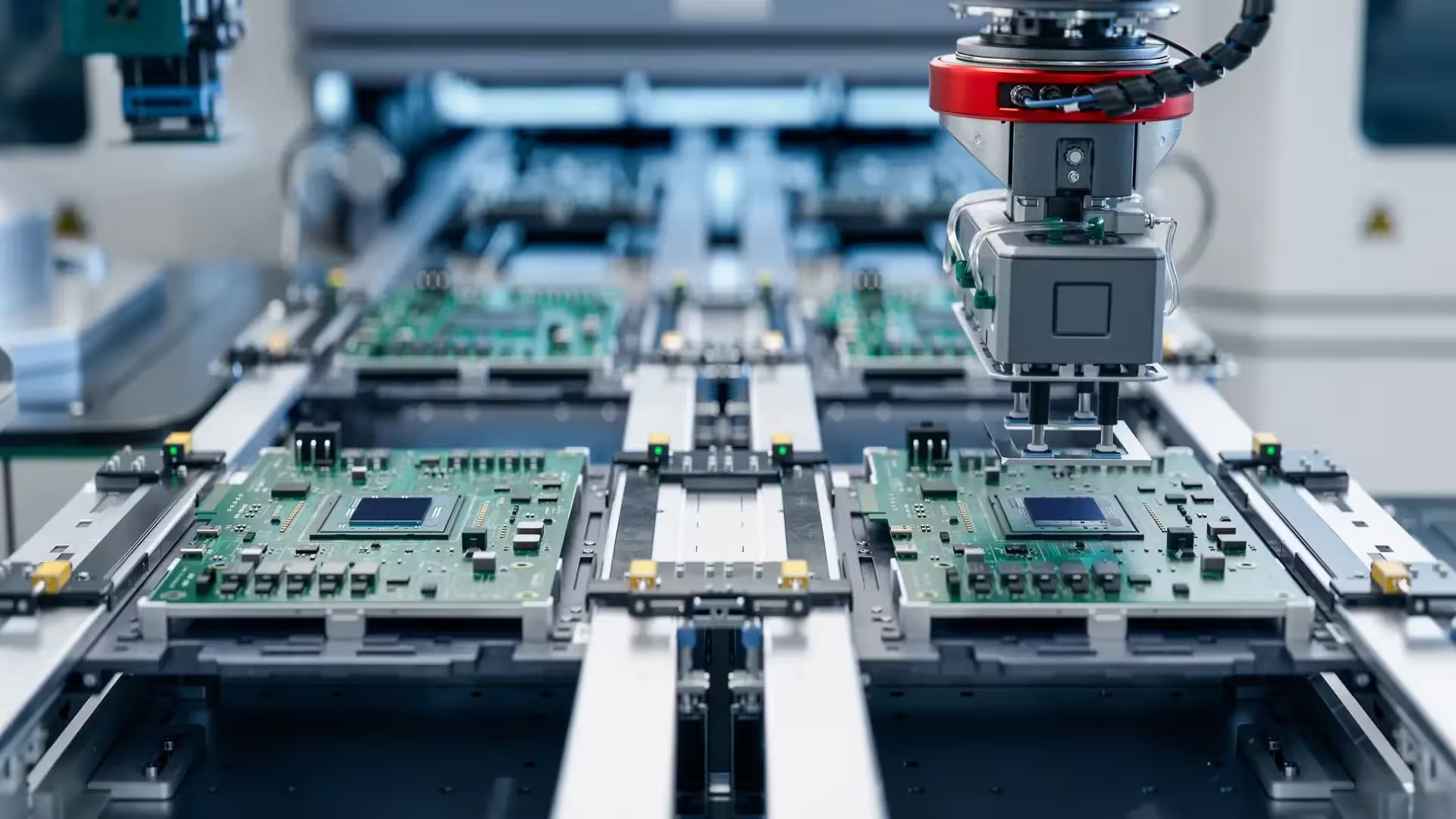
Omini PCB manufacturing service supports buyers who need a direct-from-factory route for fabrication review, material and stack-up decisions, electrical test planning, quality evidence, and delivery.
PCB fabrication review before release
Omini PCB manufacturing starts with a file-level review of Gerber or ODB++ data, drill files, stack-up, material, copper weight, surface finish, controlled impedance, solder mask, silkscreen, routing, scoring, and panelization. The goal is to find manufacturability risk before fabrication begins.
The own-factory route matters because engineering feedback, fabrication assumptions, electrical test planning, quality evidence, packing, and delivery are connected in one supplier workflow. Buyers can ask which requirements need confirmation before the purchase order is released.
- Common evidence: CAM questions, stack-up confirmation, material notes, E-test scope, CoC, labels, and packing requirements.
- Common standards references: ISO 9001:2015, UL E532498 where applicable, IPC workmanship expectations, RoHS / REACH planning.
- Common risk points: impedance tolerance, copper balance, hole size, annular ring, solder mask clearance, surface finish, and panel utilization.
From prototype to repeat PCB orders
Prototype PCB orders should not be treated as isolated transactions if the product will move into repeat builds. Stack-up decisions, material substitutions, controlled impedance, panel format, drill limits, and documentation scope should be recorded early so later revisions do not inherit hidden assumptions.
For overseas customers, this makes the RFQ easier to compare. Omini can separate what is included in bare-board fabrication from what depends on PCBA, component sourcing, testing, packaging, and delivery scope.
FAQ
How can buyers verify that Omini is a direct-from-factory PCB and PCBA supplier?
Buyers can request factory information, production-floor evidence, engineering review notes, quality records, certificate references, inspection scope, test reports, packing records, and traceability requirements during RFQ. Omini should be evaluated by the evidence attached to the specific build, not by broad marketing claims.
What RFQ files help Omini review a PCB or PCBA project accurately?
A useful RFQ includes Gerber or ODB++ files, drill data, stack-up notes, BOM with manufacturer part numbers, centroid or CPL data, assembly drawings, quantities, target schedule, acceptance criteria, test requirements, compliance needs, and delivery destination.
Which quality controls should be scoped before release?
Common controls include DFM review, incoming material checks, first article inspection, AOI, X-Ray or AXI for hidden joints, ICT, flying probe, FCT, programming, CoC, labels, ESD packing, and traceability records. The right set depends on board risk and customer acceptance criteria.
Why does an own-factory route matter for PCB and PCBA sourcing?
An own-factory route reduces handoff ambiguity because engineering review, fabrication, assembly, inspection, test, documentation, and delivery are connected through one accountable manufacturing path. Buyers can align technical assumptions before the purchase order instead of discovering gaps after production starts.