
Direct Answer
Quick turn PCBA services reduce development risk when you treat them as a partnership built on complete data, not as a race to ship boards. The buyers who save the most time and money prepare accurate BOMs, centroids, and Gerbers, then evaluate suppliers on engineering review depth, component sourcing strength, and test strategy before sending an RFQ. A thorough DFM review before production is the single highest-leverage step you can take.
What Quick Turn PCBA Actually De-Risks
A quick turn PCBA service compresses the window between design release and assembled boards, but the real value is not the calendar days saved. The value is the early detection of problems that would otherwise surface during assembly, testing, or field deployment. When you request a fast turnaround, you are asking a manufacturer to compress their planning, sourcing, and setup cycles. That compression only works if your design data is complete and your supplier has the engineering capacity to review it quickly.
The buyer's real job is to de-risk three things: component availability, board manufacturability, and test coverage. Component availability determines whether the assembly can even start on schedule. Board manufacturability determines whether the first pass will yield usable boards or require rework. Test coverage determines whether the boards that ship actually function in your application. A quick turn service that skips engineering review to save a day will cost you weeks later.
Capability Signals to Look for in a PCBA Supplier
Before you send an RFQ, evaluate the supplier's production environment and engineering process. The signals that matter most are not marketing claims but concrete details about their SMT line configuration, inspection methods, and rework experience.
SMT Line Configuration and Package Handling
Ask about the minimum component size the line can place, the number of reflow zones, and whether the line supports nitrogen reflow for fine-pitch or BGA packages. A line that handles 0201 components and 0.4 mm pitch BGAs routinely is different from one that only runs larger passive components. If your design uses QFN packages with exposed pads, ask how they control solder paste volume and whether they use stencil design software to adjust aperture ratios. These details tell you whether the supplier has solved your type of assembly problem before.
BGA and Fine-Pitch Experience
BGA assembly requires precise placement, controlled reflow profiles, and X-ray inspection capability. Ask whether the supplier has X-ray inspection on-site and how they qualify reflow profiles for different BGA body sizes and pitches. J-STD-020 and J-STD-033 govern moisture sensitivity levels and handling procedures for these components. A supplier that follows these standards will bake moisture-sensitive devices before reflow when required, which prevents the "popcorning" effect that destroys BGAs during soldering.
Inspection and Quality Systems
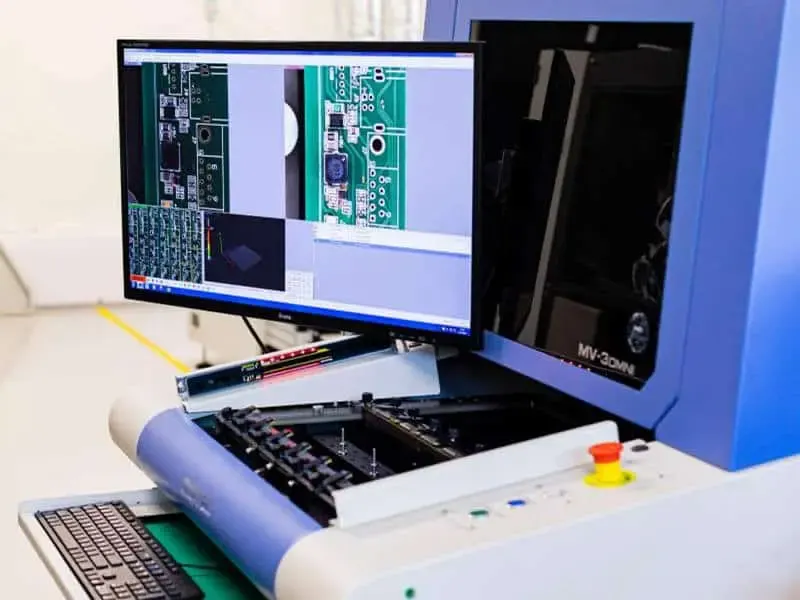
IPC-A-610 defines the acceptability criteria for assembled boards, and J-STD-001 defines the process requirements for soldered electrical and electronic assemblies. Ask which class of these standards the supplier builds to and whether they perform automated optical inspection (AOI) after reflow. For mixed-technology boards with through-hole and SMT components, ask about selective soldering or hand-soldering process controls. The inspection method directly affects your risk of receiving boards with cold joints, solder bridges, or missing components.
> Practical note: A supplier that offers a DFM report before production is signaling that they review land patterns, solder mask openings, and thermal relief before committing solder paste to a stencil. This review is where most preventable assembly defects are caught.
What Drives Cost and Schedule in Quick Turn PCBA
The price and lead time of a quick turn PCBA project are driven by factors that have nothing to do with how fast the assembly line runs. Understanding these drivers helps you make design and sourcing decisions that reduce cost before you ever request a quote.
Component Sourcing Is the Biggest Variable
Component availability is the largest source of cost and schedule uncertainty. Parts that are obsolete, on allocation, or have long lead times force the assembler to find alternates or buy from brokers, which increases price and risk. A complete BOM with manufacturer part numbers, package types, and acceptable alternates gives the supplier room to source efficiently. If your design uses a microcontroller with a 52-week lead time, no quick turn service can fix that. The supplier can only help you find a drop-in alternate or redesign around the constraint.
Board Complexity Affects Setup and Yield
Layer count, minimum trace width and spacing, via types, and copper weight all influence fabrication and assembly complexity. A 2-layer board with 6/6 mil traces and standard FR4 is straightforward. A 12-layer board with blind and buried vias, impedance-controlled traces, and 0.5 mm pitch BGAs requires more setup time and tighter process controls. The laminate choice also matters: standard FR4 behaves differently than high-Tg or low-loss materials during reflow. These factors affect both the fabrication cost and the assembly yield.
Test Requirements Add Time and Fixture Cost
Every test point you require adds time to the schedule and cost to the project. In-circuit test (ICT) requires a custom fixture, which adds lead time and cost. Flying probe testing eliminates the fixture but is slower for high-volume runs. Functional test requires a test procedure, test code, and often a custom test jig. If your design has no test points and no test strategy, the supplier cannot verify the boards, and you accept the risk of field failures. A clear test plan in the RFQ lets the supplier quote accurately and schedule test resources.
The RFQ Readiness Checklist
Use this checklist to prepare your files and evaluate supplier responses. The goal is to make your project easy to quote accurately and easy to build correctly on the first pass.
| RFQ Item | What to Provide | Why It Matters |
|---|---|---|
| BOM | Manufacturer part numbers, quantities, reference designators, and acceptable alternates | Missing or vague part data forces sourcing assumptions and delays |
| Centroid file | X/Y coordinates, rotation, and layer for every SMT component | Incorrect placement data causes assembly errors and rework |
| Gerber files | All copper layers, solder mask, silkscreen, and drill files | Incomplete fabrication data stops the PCB order before assembly |
| Schematic or netlist | Required for full DFM review | Lets the supplier verify footprints and connectivity before production |
| Assembly notes | Reflow profile requirements, conformal coating, special handling | Prevents process errors for sensitive or unusual components |
| Test requirements | ICT, flying probe, functional test, or no test | Determines fixture cost, schedule, and verification level |
| Panelization preference | Whether you want panelized boards or individual boards | Affects assembly efficiency and cost per board |
Questions to Ask Before You Commit
The questions you ask during supplier evaluation reveal more about their capability than their marketing materials. Ask specific questions about process, review, and communication.
Engineering Review Process
Ask whether the supplier performs a DFM review before ordering components or building stencils. A supplier that reviews your Gerbers and BOM before committing to a schedule is protecting you from late-stage surprises. Ask how they handle discrepancies they find: do they contact you immediately, or do they make assumptions and proceed? The answer tells you how much control you retain over your own design.
Component Sourcing Flexibility
Ask how the supplier handles long-lead or obsolete components. Do they have established relationships with authorized distributors? Can they source from brokers when necessary, and what is their incoming inspection process for broker parts? A supplier with strong sourcing relationships can find reliable alternates faster than one that only works with a single distributor. This capability directly affects your schedule when a part goes on allocation.
Test and Quality Coverage
Ask what inspection methods are standard and which are optional. Does the supplier perform AOI on every board or only on first articles? Is X-ray inspection available for BGA and QFN packages? What is their process for documenting and communicating rework? The answers define your quality risk and your ability to trace problems back to their root cause.
Communication and Approval Workflow
Ask how the supplier handles engineering questions during production. Do they have a dedicated engineer who reviews your files, or does the quote come from a salesperson who forwards questions later? The speed and quality of engineering communication is the best predictor of a smooth quick turn project. A supplier that responds to DFM questions with specific, actionable feedback is more valuable than one that simply accepts your files and hopes for the best.
Common Mistakes That Delay Quick Turn PCBA Projects
Most delays in quick turn PCBA projects come from the same preventable mistakes. Recognizing these patterns helps you avoid them before they cost you time and money.
Incomplete or Inaccurate BOM Data
A BOM without manufacturer part numbers, with incorrect quantities, or with reference designators that do not match the silkscreen forces the supplier to stop and ask questions. Every question adds a day to the schedule. Verify that every component on the BOM has a valid manufacturer part number, that the quantities match the board population, and that alternates are clearly identified.
Missing or Incorrect Centroid Data
The centroid file tells the pick-and-place machine where to put each component. If the coordinates are wrong, the machine places components in the wrong location, and you get boards that fail test or require rework. Verify that the centroid file matches the final Gerber revision. If you moved a component after generating the centroid file, regenerate it before sending the RFQ.
Board Design Issues That Force Rework
Incorrect footprints, missing thermal relief on ground planes, and solder mask openings that do not match the land pattern are common design issues that cause assembly defects. IPC-7351 defines land pattern requirements for SMT components. A supplier that reviews your footprints against these standards before building the stencil can catch these issues early. A supplier that builds without review will discover them after the first reflow, and you will pay for the rework.
Unclear Test Requirements
If you do not specify test requirements in the RFQ, the supplier will make assumptions. Those assumptions may not match your quality expectations. If you need functional test coverage, specify the test points, the test procedure, and the pass/fail criteria. If you need ICT, understand that the fixture adds cost and lead time. If you accept no test, you accept the risk of shipping defective boards.
How to Evaluate Supplier Risk Before Assembly
Evaluating a quick turn PCBA supplier is about assessing risk across the entire project lifecycle, not just the assembly step. The same principles apply whether you are working with a full-service EMS provider or a specialized assembly shop.
Assess the Handoff Between PCB Fabrication and Assembly
The transition between PCB fabrication and assembly is a common source of quality problems. If your fabricator and assembler are different companies, verify that the surface finish, solder mask, and panelization are compatible with the assembly process. ENIG and HASL behave differently during reflow, and a panel that works for fabrication may not work for assembly. For a deeper look at this transition, see How to Evaluate IMS PCB and PCBA Supplier Handoff Risk Before Assembly.
Evaluate Sourcing and Supply Chain Risk
Component sourcing is the largest source of schedule risk in quick turn PCBA. Evaluate the supplier's ability to handle allocation, obsolescence, and long-lead components. Ask about their relationships with authorized distributors and their process for qualifying alternates. A supplier that can source reliably is worth more than one that promises faster assembly but cannot get the parts. For a broader view of sourcing risk, see How to Evaluate SMT Assembly Risk from Sourcing and Supplier Trends.
Consider Long-Term Supply Chain Trends
The electronics industry faces ongoing volatility in component availability and lead times. A supplier that monitors these trends and communicates them to customers is more valuable than one that reacts only when a part goes on allocation. Ask how the supplier tracks component availability and how they communicate potential shortages before they affect your schedule. For a detailed analysis of supply chain risk factors, see How to Evaluate SMT Assembly Risk from Supply Chain and Lead Time Trends.
Verify Quality Systems and Standards Compliance
Ask the supplier which industry standards they build to and how they document compliance. J-STD-001 covers soldering process requirements, and IPC-A-610 covers assembled board acceptability. A supplier that builds to these standards and can show you their internal quality metrics is lower risk than one that cannot articulate their process controls. If your product requires box build or final system integration, evaluate the supplier's capabilities in that area as well. See How to Choose a Suitable Box Build Assembly Manufacturer for Your Device for guidance on extending your evaluation beyond bare board assembly.
The Role of DFM Feedback in Saving Time
A thorough DFM review before production is the most effective way to save time and money on a quick turn PCBA project. The review catches design issues that would otherwise cause assembly defects, test failures, or field returns. When you receive a DFM report, review it carefully and respond to every finding.
What a Good DFM Report Includes
A good DFM report covers land pattern verification against IPC-7351, solder mask opening checks, thermal relief analysis, and component placement issues. It also flags BOM problems like missing part numbers, incorrect package types, or components that are obsolete or on allocation. The report should be specific enough that you can act on each finding without additional research.
How to Respond to DFM Findings
Treat DFM findings as engineering input, not criticism. If the supplier flags a footprint that does not match the component package, verify the footprint against the component datasheet and correct the design. If the supplier suggests a different stencil aperture for a fine-pitch component, ask for the reasoning and the expected benefit. The goal is to reach agreement on the design before solder paste touches the stencil.
> Rule of thumb: Every DFM finding you resolve before production saves at least one day of schedule compared to discovering the issue after assembly. A single rework cycle on a complex board can cost more than the entire DFM review fee.
Making the Decision: What to Prioritize
When you compare quick turn PCBA suppliers, prioritize engineering capability over speed. A supplier that offers a slightly longer lead time but provides a thorough DFM review and has strong sourcing relationships will deliver working boards faster than a supplier that promises the shortest lead time but skips engineering review. The same principle applies when you evaluate a custom PCB manufacturer: quality and reliability depend on process controls, not on how fast the order moves through the shop. See Custom PCB Board Manufacturer: How to Ensure Quality and Reliability for a framework that applies to both fabrication and assembly.
Omini operates as a manufacturing partner that combines PCB fabrication and PCBA assembly under one engineering review process. When you work with a single partner for both steps, the DFM review covers the entire manufacturing chain, and the handoff risk between fabrication and assembly is eliminated. This integrated approach is particularly valuable for quick turn projects where every day of schedule matters.
Frequently Asked Questions
What affects the accuracy of a quick turn PCBA quote?
Quote accuracy depends on the completeness of your BOM, centroid, and Gerber files, plus the clarity of your test requirements. Missing part numbers, alternate suppliers, or unverified footprints force the assembler to make assumptions, which can lead to cost overruns and delays.
What files are needed for a quick turn PCBA RFQ?
You need a complete BOM with manufacturer part numbers, a centroid file with X/Y coordinates and rotation, Gerber files for the PCB, and a schematic or netlist if you want a full DFM review. Include any special assembly notes like BGA reflow profiles or conformal coating requirements.
How do I compare quick turn PCBA suppliers?
Compare suppliers on their engineering review process, SMT line capabilities, component sourcing flexibility, and test coverage. Ask for a DFM report before assembly, check if they can handle BGA or mixed-technology boards, and verify their quality systems align with J-STD-001 or IPC-A-610.
What risks cause delays in quick turn PCBA projects?
The most common delays come from incomplete BOM data, long-lead components, and missing test fixtures. Board design issues like incorrect footprints or insufficient thermal relief can also cause rework. A supplier that performs a thorough DFM review before production can catch these issues early.
How does component sourcing impact quick turn PCBA cost?
Component availability is the biggest variable in cost and lead time. Parts that are obsolete, on allocation, or have long lead times require sourcing alternatives or buying from brokers, which increases price and risk. A supplier with strong sourcing relationships can help you find reliable alternates faster.
> Engineering handoff note: How to Evaluate SMT Assembly Risk from Aerospace and Industrial Automation Trends before the release package is frozen.
> Engineering handoff note: How to Evaluate SMT Assembly Risk from PCB Design and KiCad Trends before the release package is frozen.