
Direct Answer
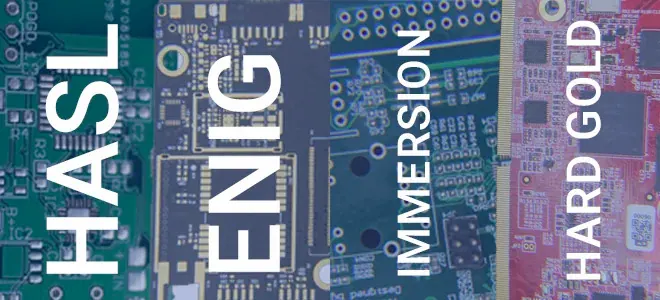
ENIG, OSP, HASL, ENEPIG, and immersion silver all solve the same base problem: exposed copper oxidizes and will not solder reliably if it is left unprotected. The right finish depends on the assembly geometry, storage window, RF sensitivity, bonding method, and cost target.
For most dense SMT boards, start with ENIG. For fast-turn, cost-sensitive high-volume SMT, consider OSP. For simple boards with large pads, HASL can still be practical. For wire bonding or high-reliability mixed interconnects, review ENEPIG. For nickel-free RF-sensitive surfaces, review immersion silver.
Comparison
| Surface finish | Best fit | Main limitation |
|---|---|---|
| ENIG | BGA, QFN, fine-pitch SMT, longer storage | Higher cost and nickel-related process risks |
| HASL | Simple boards, through-hole, low-density SMT | Uneven pads; weak fit for BGA and fine pitch |
| OSP | Low-cost flat finish with quick assembly | Shorter storage and handling margin |
| ENEPIG | Wire bonding, high-reliability mixed interconnects | Highest cost and more process control |
| Immersion Silver | Fine pitch, RF-sensitive or nickel-free requirements | Tarnish, sulfur exposure, and packaging sensitivity |
Selection Logic
Start with the component mix. BGA, QFN, LGA, and dense fine-pitch SMT need flat pads, which moves the decision away from HASL and toward ENIG, OSP, ENEPIG, or immersion silver.
For the entity-level definition and RFQ boundary, use the ENIG PCB Surface Finish Reference before choosing between detailed finish guides.
For a focused two-option decision between gold-nickel finish control and solder-coated pad tradeoffs, use the ENIG vs HASL PCB Surface Finish comparison.
Then check the supply chain. If boards may sit in storage, be handled repeatedly, or move between separate fabrication and assembly vendors, ENIG is usually more forgiving than OSP or immersion silver.
Finally check special electrical or interconnect needs. Nickel can be undesirable in some RF paths, so immersion silver may be reviewed. Wire bonding or mixed solder-and-bond requirements move the discussion toward ENEPIG.