
Direct Answer
Medical PCB assembly should be reviewed around documentation control, component traceability, cleanliness expectations, inspection depth, firmware handoff, and acceptance evidence before any production commitment.
Engineering Context
What should be reviewed before medical PCB assembly? The answer should change what the buyer sends before quote: design files, BOM control, inspection scope, stackup notes, firmware access, test evidence, and approval rules for alternates. If the industry label does not change those handoff inputs, the page should stay merged into the general industries hub instead of becoming a standalone URL.
This is a published RFQ review guide, not a certification or regulatory approval page. It does not claim FDA clearance, ISO 13485 certification for a specific project, clinical validation, product safety approval, or patient-use suitability. Those decisions belong to the product owner, quality system, and regulatory review. The page helps engineering and procurement teams define what the assembly supplier can actually quote and verify.
Design Constraints
- controlled documentation for revision, BOM, assembly drawing, inspection scope, and test evidence
- compact electronics with sensors, displays, batteries, radios, or patient-adjacent interfaces depending on product class
- component lifecycle and approved alternates that cannot change without engineering review
Constraint Review
The constraint review should ask what would change on the released drawing, BOM, stackup, assembly note, inspection plan, or functional test if this product moved from prototype to pilot production. A useful industry page explains those changes plainly. It should not repeat generic SMT capability, and it should not turn product-market language into unsupported manufacturing claims.
Manufacturing Risks
- unapproved BOM substitution changing safety, firmware, or validation assumptions
- insufficient inspection evidence for hidden solder joints or fine-pitch packages
- cleanliness, handling, or packaging expectations discovered after quote
- test procedure missing firmware version, calibration, or acceptance criteria
Risk Boundary
These risks are pre-quote screening prompts. They help engineering and procurement decide which assumptions must be visible before a supplier estimates cost, yield, lead time, inspection depth, and test effort. They do not replace DFM, DFA, DFT, released acceptance criteria, qualification evidence, or regulatory review owned by the product team.
Recommended Checks
- incoming BOM and revision review before sourcing
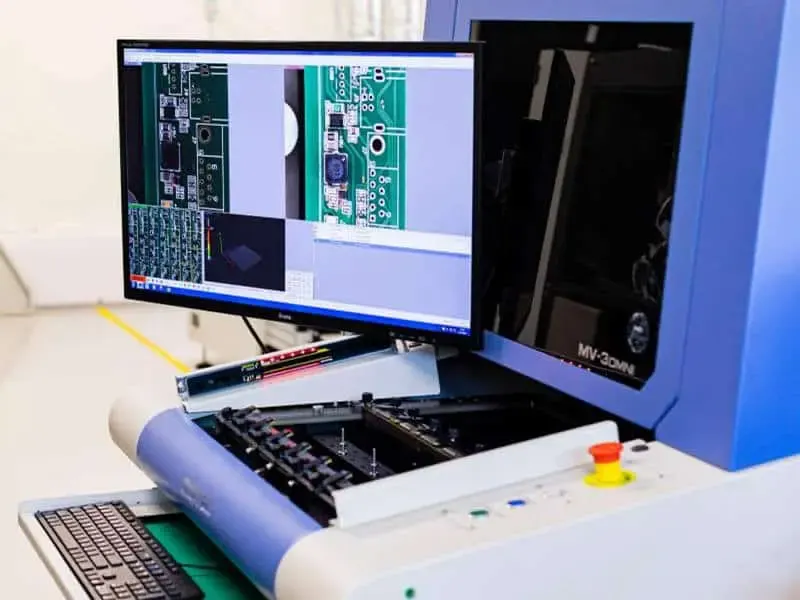
- AOI plus X-ray where hidden joints justify it
- functional test defined by the buyer with firmware, calibration, and pass/fail evidence
Stackup And Layout Considerations
- Name impedance, RF, battery, or sensor-interface assumptions when they affect the released design.
- Separate practical manufacturing review from regulatory approval language.
- Keep material, finish, and cleanliness expectations visible in the quote package.
RFQ Inputs
- released Gerber or ODB++, controlled BOM, centroid, assembly drawing, revision, inspection requirement, firmware, test procedure, packaging notes, and acceptance evidence
- approved manufacturer part numbers and explicit alternate approval rules
Decision Table
| Medical PCBA decision | If it is undefined | What to send |
|---|---|---|
| Revision control | Supplier may quote or build against the wrong data set. | Released Gerber or ODB++, fabrication drawing, BOM revision, assembly drawing, and ECO status. |
| Component traceability | Substitutions or lot records may not support later quality review. | Approved manufacturer part numbers, alternates, sourcing rules, and required traceability evidence. |
| Cleanliness and handling | Packaging, flux residue, or handling expectations may be discovered too late. | Cleaning expectations, packing notes, ESD handling, cosmetic limits, and storage requirements. |
| Hidden-joint inspection | AOI can miss BGA, QFN, LGA, or bottom-terminated solder risk. | Package risk list, X-ray expectation, inspection records, and acceptance scope. |
| Firmware and functional test | A powered board may not prove required product behavior. | Firmware version, programming method, fixture access, calibration steps, and pass/fail criteria. |
Example Review
A useful Medical PCB Assembly RFQ names the operating constraints, component-risk areas, inspection scope, test evidence, firmware handoff, approved alternates, quantity, and lead time before the supplier quotes production assumptions. The goal is not to make the quote package longer; it is to make the expensive assumptions explicit before fabrication, sourcing, stencil release, fixture planning, or shipment preparation begins.
If those inputs are missing, resolve the handoff before quote approval. The page earns indexing only because it helps an engineer make a better release decision than the general industries hub can provide.
Source Notes
- IPC standards source boundary - IPC official resources (standard).
Source fact: IPC official resources are used to locate standards context and public summaries, while paid standard text remains outside the repository. Omini interpretation: Use this to separate standards-backed engineering framing from copied acceptance criteria or unsupported numeric claims. Allowed usage: Use when a page needs IPC context but does not have a narrower public source registered yet.
- Electronics reliability source boundary - NASA NEPP resources (government).
Source fact: NASA NEPP publishes public electronics reliability resources for parts, packaging, workmanship, and risk review in high-reliability contexts. Omini interpretation: Use this to support reliability-oriented source review, not to imply space-grade manufacturing or qualification for ordinary commercial PCBA pages. Allowed usage: Use for reliability, inspection, failure-risk, and high-reliability research notes where a public NEPP page is applicable.
- Existing OminiPCB repository content (internal): May seed structure and internal links; engineering claims still need external verification when specifications are involved.
No FDA, ISO 13485, clinical, regulatory, safety, patient-use, or claimed customer evidence. This is an RFQ review guide only.
CTA
Request a PCB quote when design files, BOM control, inspection scope, and test criteria are ready for engineering review.