
Direct Answer
Via-in-pad often needs filling, planarization, and capping because an open via in a solder pad can wick solder during reflow and leave a weak or open joint.
Decision Model
Decision rule: Via-in-pad often needs filling, planarization, and capping because an open via in a solder pad can wick solder during reflow and leave a weak or open joint. Treat the answer as release-ready only when the affected files, assumptions, and acceptance evidence are visible before quote.
Why It Matters
Explain the solder-joint risk behind via-in-pad processing. Late discovery changes cost, schedule, yield, or acceptance evidence after engineering and procurement have already made assumptions.
Engineering Principles
- Start from the engineering risk the question is trying to remove, not from a preferred keyword or default process.
- Explain the solder-joint risk behind via-in-pad processing. The answer should change at least one released input, review step, supplier responsibility, inspection scope, or acceptance expectation.
- If the same design files, stackup notes, BOM, inspection scope, and test plan would be sent either way, keep the answer as an FAQ on the closest entity page instead of publishing a standalone question.
Example
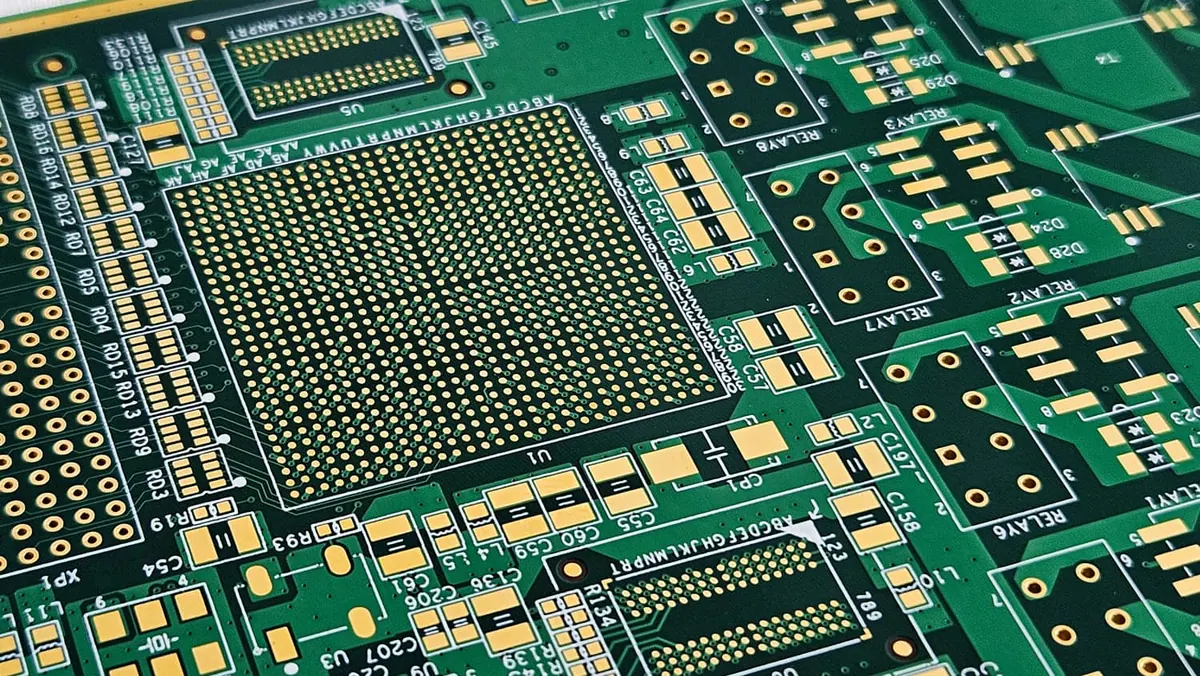
A fine-pitch BGA pad with an open via can lose solder into the barrel; a filled and capped via restores a flatter soldering surface.
Comparison
Use a comparison page when the decision is really between two named materials, finishes, packages, inspection methods, or sourcing models. Keep this page focused on the single question above.
RFQ Inputs
- released fabrication and assembly files
- revision, quantity, lead time, and allowed alternates
- materials, surface finish, stackup, inspection, and test requirements affected by this decision
- the reason why does via-in-pad need filled and capped vias? changes the quote or manufacturing review
FAQ
What should be checked before quote?
Confirm source files, revision, materials, stackup, BOM, inspection scope, test requirements, quantity, and lead time before treating the answer as release-ready.
When should this become part of the RFQ?
Add it to the RFQ when the answer changes fabrication, sourcing, assembly, inspection, test, or delivery responsibility.
Can this replace a fabrication drawing?
No. It is a decision guide; the released drawing, BOM, and assembly notes remain the controlling documents.
Source Notes
- Via protection terminology boundary - IPC-4761 via protection design guide (standard).
Source fact: IPC-4761 is the source boundary for via protection concepts such as tented, plugged, filled, and capped vias. Omini interpretation: Use this to require explicit fabrication notes for via protection instead of vague wording like covered vias or sealed vias. Allowed usage: Use on via-in-pad, HDI, BGA, and design-rule pages when explaining process terminology.
- Fine-pitch package via-in-pad risk - PCB Design Guidelines for 0.5mm Package-On-Package Applications Processors (semiconductor_vendor).
Source fact: TI package-on-package layout guidance addresses PCB design details around fine-pitch processor packages where pad, via, and escape-routing choices affect assembly. Omini interpretation: Use this to explain that via-in-pad under fine-pitch BGA or PoP packages is a fabrication and assembly process choice, not only a CAD routing shortcut. Allowed usage: Use on via-in-pad, BGA, QFN, HDI, and assembly-risk pages.
- Existing OminiPCB repository content (internal): May seed structure and internal links; engineering claims still need external verification when specifications are involved.
CTA
Request a PCB quote when the design files and acceptance requirements are ready for engineering review.
RFQ Readiness Guide
The purpose of Why does via-in-pad need filled and capped vias? is to make a manufacturing decision possible before a supplier spends time interpreting missing information. An RFQ is useful when two suppliers can price the same technical scope. If each supplier fills in different assumptions, the prices are not comparable and the delivery promise is not meaningful.
Minimum Data Set
1. Board name, revision, quantity by build stage, target date, and shipping destination. 2. Fabrication files, finished dimensions, layer count, thickness, copper weights, material family, surface finish, and impedance requirements. 3. Assembly BOM with manufacturer part numbers, approved alternates, customer-supplied parts, DNI items, and lifecycle concerns. 4. Assembly drawing, centroid data, polarity and orientation rules, panelization assumptions, and special process notes. 5. Inspection, electrical test, programming, calibration, serialization, coating, cleaning, and packaging requirements. 6. Commercial boundaries: tooling, NRE, setup, MOQ, split shipments, material ownership, and change-order treatment.
Assumption Register
Ask the supplier to return a short assumption register with the quote. It should list missing files, ambiguous part numbers, substitutions, stock risks, panel assumptions, test coverage, and any requirement that was not included in the price. This converts hidden uncertainty into a reviewable engineering list.
Quote-Comparison Table
Compare suppliers on the same columns: material and finish, board class, copper and thickness, assembly quantity, component sourcing model, inspection scope, test coverage, tooling, NRE, lead time, yield or rework assumptions, packaging, and validity period. A low unit price can be caused by omitted test, an unapproved alternate, or a lead time that begins only after material arrival.
Change Control
Before award, define which changes need buyer approval. Typical examples include laminate family, surface finish, component manufacturer, date code, solder alloy, reflow profile limits, test program, and packaging. Keep the RFQ package revision-controlled so that a later quote can be compared with the original scope.
FAQ
Can a Gerber file alone support an assembly quote?
No. Assembly also requires BOM, placement data, assembly drawing, sourcing assumptions, and the required inspection and test scope.
Why do quotes differ so much?
Suppliers may be pricing different materials, alternates, panel utilization, test levels, tooling, freight assumptions, or schedule definitions.
What is the best next step after receiving quotes?
Normalize the assumptions first, then ask targeted clarification questions before comparing price or selecting a supplier.