
Direct Answer
The electronics manufacturing process is a complex, multi-stage workflow that transforms a conceptual design into a reliable, mass-producible electronic product. It begins with a rigorous Design for Manufacturing (DFM) review to validate the schematic and layout, followed by strategic component sourcing to mitigate supply chain risks. The core production phase involves Surface Mount Technology (SMT) placement, through-hole assembly, and soldering, culminating in comprehensive testing methods like Automated Optical Inspection (AOI) and In-Circuit Testing (ICT) to ensure functional integrity. Success in this domain relies on seamless coordination between the original equipment manufacturer (OEM) and their contract manufacturing partner to balance cost, quality, and speed.
For modern hardware teams, the process is no longer just about putting parts on a board; it is about managing the entire lifecycle from the initial Bill of Materials (BOM) to the final shipment. Whether you are working with a China EMS provider or a domestic partner, the fundamental steps remain consistent: validate the design, secure the supply chain, execute precise assembly, and verify performance. This guide breaks down these critical phases, offering practical insights into how a strategic manufacturing partner like Omini navigates these challenges to deliver high-yield production runs.
The Strategic Foundation: DFM and Supply Chain Alignment
Before a single component is placed on a reel, the foundation of a successful manufacturing run is laid during the pre-production phase. This stage is often underestimated by startups and even established engineering teams who rush to prototype without a full production perspective. The first critical step is the Design for Manufacturing (DFM) analysis. This is not merely a checklist but a deep technical review where the manufacturing team scrutinizes the Gerber files, assembly drawings, and BOM to identify potential pitfalls. Issues such as insufficient solder mask clearance, thermal vias placed too close to components, or footprints that do not match the manufacturer's pick-and-place capabilities can lead to catastrophic yield loss if not caught early.
When reviewing a design, an experienced EMS provider looks beyond the schematic to the physical realities of the assembly line. For instance, if a design utilizes a high-density interconnect (HDI) structure or specific material requirements, the manufacturing partner must verify that the chosen fabrication capabilities align with the design intent. This is where understanding the nuances of PCB materials becomes vital. Selecting the wrong substrate can lead to delamination under thermal stress or signal integrity issues at high frequencies. For a deeper dive into how material selection impacts performance, teams should review resources like Comparing Different Types of Printed Circuit Board Materials to understand the trade-offs between standard FR-4, high-Tg laminates, and specialized substrates.
Simultaneously, the supply chain strategy must be activated. In the current global landscape, component availability is volatile. A robust EMS partner does not simply order parts based on the BOM; they perform a risk analysis to identify long-lead items, obsolete parts, or single-source dependencies. This proactive approach allows the team to suggest approved alternates or redesign specific circuits to accommodate available inventory. This is particularly relevant for complex assemblies where a single missing capacitor can halt the entire production line. For a detailed look at how to manage these risks, our guide on BOM Risk Strategy for Turnkey PCB Assembly outlines specific tactics for navigating component shortages without derailing project timelines.
Furthermore, the choice of the manufacturing partner defines the scope of this alignment. A true EMS provider acts as an extension of the engineering team, offering value engineering (VE) suggestions that can reduce costs without sacrificing performance. Whether the project requires a standard two-layer board or a complex multi-layer stack-up, the partner must validate the design against their specific production capabilities. For those exploring advanced thermal management solutions, understanding the role of specialized boards is essential. You can read more about how Copper Core PCBs: Revolutionizing the Electronics Industry can solve thermal challenges in high-power applications, which is a common requirement in LED and power electronics manufacturing.
The Assembly Workflow: From SMT to Through-Hole
Once the design is validated and the supply chain is secured, the physical assembly process begins. This phase is the heart of the electronics manufacturing process, where precision engineering meets high-speed automation. The workflow typically starts with the preparation of the Printed Circuit Board (PCB). Before any components are applied, the boards undergo a thorough inspection to ensure they meet the dimensional and surface quality standards required for assembly. Any defects in the bare board, such as warpage or plating issues, are identified and addressed at this stage to prevent downstream failures.
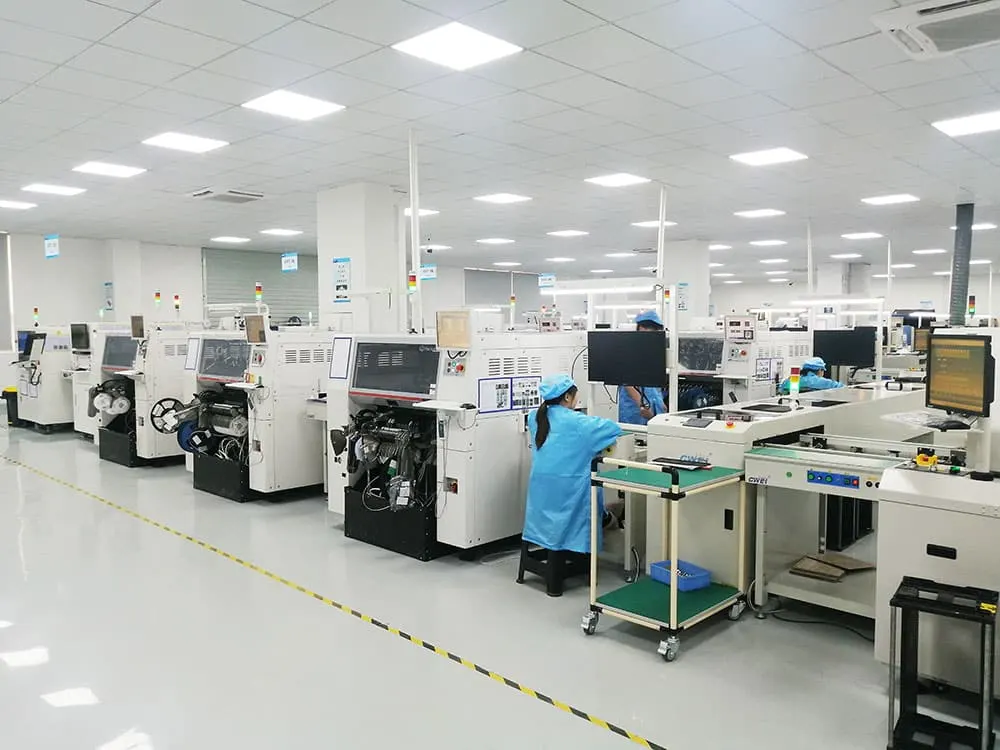
The core of modern assembly is Surface Mount Technology (SMT). In this process, solder paste is printed onto the PCB pads using a stencil, a step that requires precise alignment and pressure control to ensure consistent paste volume. Following the paste application, the pick-and-place machine positions surface mount components onto the board. Modern machines are capable of placing thousands of components per hour with micron-level accuracy. The speed and precision of this step are critical, especially for fine-pitch components like BGAs (Ball Grid Arrays) and 0201 or 01005 passives. The reflow soldering process follows, where the board passes through a reflow oven with a carefully controlled thermal profile. This profile must be optimized for the specific solder alloy and component thermal mass to ensure proper wetting without damaging heat-sensitive parts.
For designs that include through-hole components, the process diverges slightly. While some through-hole parts can be placed by machines, larger connectors, transformers, and heavy components often require manual insertion or wave soldering. Wave soldering involves passing the bottom of the PCB over a wave of molten solder, which wicks up through the holes to form reliable mechanical and electrical joints. The choice between manual insertion and automated wave soldering depends on the volume and complexity of the design. A high-mix, low-volume production run might rely more on manual labor for flexibility, whereas high-volume runs prioritize automation for consistency and speed.
Throughout the assembly line, the role of the EMS provider is to maintain strict process control. This includes monitoring the solder paste viscosity, the pick-and-place nozzle vacuum, and the reflow oven temperature zones. Any deviation can lead to defects such as tombstoning, bridging, or cold joints. The manufacturing partner must also manage the flow of materials to ensure that the line never stops due to a missing reel or a misaligned feeder. This level of operational discipline is what separates a basic assembler from a strategic manufacturing partner. For a broader understanding of the underlying fabrication steps that precede assembly, referring to the Circuit Board Manufacturing Process: A Comprehensive Guide for Beginners provides essential context on how the bare boards are created and prepared for the assembly line.
In many cases, the assembly process also involves conformal coating or potting to protect the electronics from environmental factors like moisture, dust, and vibration. These processes are often performed after the initial electrical testing and require careful masking of connectors and test points. The integration of these additional steps into the main assembly flow requires precise scheduling and quality checks to ensure that the protective layers do not interfere with the functionality of the device. An experienced EMS team will plan these steps early in the process to avoid bottlenecks and ensure that the final product meets the required environmental standards.
Quality Assurance and Testing Protocols
Quality assurance in electronics manufacturing is not a single step at the end of the line; it is a continuous thread woven through every stage of the process. From the moment components arrive at the facility, they undergo incoming quality control (IQC) to verify authenticity and specifications. Counterfeit components are a significant risk in the global supply chain, and a reputable EMS provider will have strict protocols to detect and reject non-compliant parts. This includes visual inspection, X-ray analysis of solder balls, and electrical testing of critical components.
During the assembly process, Automated Optical Inspection (AOI) is the first line of defense against defects. AOI cameras scan the board after solder paste printing and after reflow to detect issues such as missing components, incorrect polarity, solder bridges, or insufficient solder. This automated inspection is far more consistent and faster than manual visual checks, allowing for immediate feedback to the assembly machines. If AOI detects a recurring issue, the line can be stopped and adjusted before a large batch of defective boards is produced. For complex assemblies with hidden solder joints, such as BGAs or QFNs, X-ray inspection is essential. This non-destructive testing method allows engineers to see inside the component to verify the quality of the solder connections, ensuring that there are no voids or shorts that could lead to field failures.
Once the assembly is complete, the boards undergo electrical testing. In-Circuit Testing (ICT) uses a bed-of-nails fixture to make contact with specific test points on the board, verifying that each component is present, correctly oriented, and functioning within specified parameters. ICT can detect shorts, opens, and component value errors with high precision. For more complex functional requirements, Functional Testing (FCT) is performed. This involves simulating the actual operating conditions of the device to ensure it performs its intended function. FCT might include powering up the device, running software diagnostics, and testing communication interfaces. The data from these tests is often logged and analyzed to identify trends and improve the manufacturing process over time.
The final stage of quality assurance involves a visual inspection and a final functional check before packaging. This is the last chance to catch any cosmetic defects or assembly errors that might have been missed. The EMS provider must ensure that the packaging meets the specific requirements for shipping, including anti-static protection, moisture barrier bags, and clear labeling. A robust quality management system (QMS) is essential for maintaining these standards. Many EMS providers are certified to ISO 9001 or IATF 16949, which provides an additional layer of assurance that the manufacturing processes are consistent and reliable. For those interested in how these quality standards impact the overall reliability of the product, exploring the Quality and Reliability cluster offers further insights into the rigorous testing protocols used in the industry.
Choosing the Right EMS Partner for Your Needs
Selecting the right electronics manufacturing services (EMS) partner is one of the most critical decisions an OEM can make. The choice goes beyond finding a vendor with the lowest price; it involves finding a strategic ally who can support the product from prototype to mass production and beyond. A good EMS provider brings deep technical expertise, a robust supply chain network, and the flexibility to adapt to changing market conditions. They should be able to handle the full spectrum of services, from PCB fabrication and assembly to testing, box build, and logistics.
When evaluating potential partners, it is important to assess their capabilities in specific areas relevant to your product. For example, if your design involves high-frequency RF components, you need a partner with experience in controlled impedance manufacturing and RF testing. If your product is for the automotive industry, the partner must be familiar with the rigorous quality standards and traceability requirements of the automotive sector. The ability to scale production is also a key factor. A partner that excels at low-volume prototyping may struggle with the efficiency and consistency required for high-volume runs. Conversely, a high-volume specialist might not offer the flexibility needed for iterative design changes during the development phase.
Location and logistics also play a significant role in the decision-making process. While many companies look to China EMS providers for cost advantages, it is essential to consider the total cost of ownership, including shipping, tariffs, and communication overhead. A local partner might offer faster turnaround times and easier collaboration, while an overseas partner might provide significant cost savings for high-volume production. The best approach often involves a hybrid model, where prototyping and low-volume runs are done locally for speed, and mass production is shifted to a cost-effective location once the design is mature. Understanding the different EMS service model options can help you determine the best fit for your specific needs and budget.
Communication and transparency are also vital. A good EMS partner will keep you informed throughout the process, providing regular updates on production status, quality metrics, and any potential issues. They should be willing to collaborate on design improvements and supply chain strategies to optimize your product. The relationship should be a partnership, not just a transaction. By working closely with an experienced EMS provider, you can leverage their expertise to improve your product's quality, reduce costs, and accelerate time-to-market. Whether you are a startup launching your first product or an established company scaling up production, the right manufacturing partner can make all the difference in your success.
Field Notes on Production Realities
In the trenches of electronics manufacturing, the gap between a theoretical design and a mass-produced product is bridged by experience and adaptability. The most successful projects are those where the engineering team and the manufacturing partner maintain an open dialogue from day one. It is not uncommon for a design that looks perfect on a schematic to encounter unforeseen challenges during the SMT process, such as thermal warpage or component tombstoning. These issues are not failures but opportunities for refinement. A seasoned EMS team will flag these potential problems early, suggesting minor layout tweaks or process adjustments that save weeks of rework.
Supply chain volatility remains a constant reality. Even with the best planning, component shortages can occur, and lead times can fluctuate unexpectedly. The key to navigating this uncertainty is flexibility. Having a pre-approved list of alternate components and a willingness to redesign non-critical circuits can keep production moving when the primary supply chain stalls. This agility is a hallmark of a true manufacturing partner. They do not just wait for parts to arrive; they actively manage the inventory and suggest solutions that keep the line running. This proactive approach is what separates a commodity assembler from a strategic partner like Omini, who understands that the goal is not just to build boards, but to deliver a functional, reliable product to the market.
Ultimately, the electronics manufacturing process is a complex dance of precision, logistics, and quality control. It requires a deep understanding of materials, processes, and the global supply chain. By partnering with an experienced EMS provider, OEMs can focus on their core competencies—innovation and design—while leaving the complexities of manufacturing to the experts. The result is a product that is not only built to spec but is also robust, reliable, and ready for the demands of the real world. As the industry continues to evolve with new technologies and tighter timelines, the value of a knowledgeable and adaptable manufacturing partner will only continue to grow.