
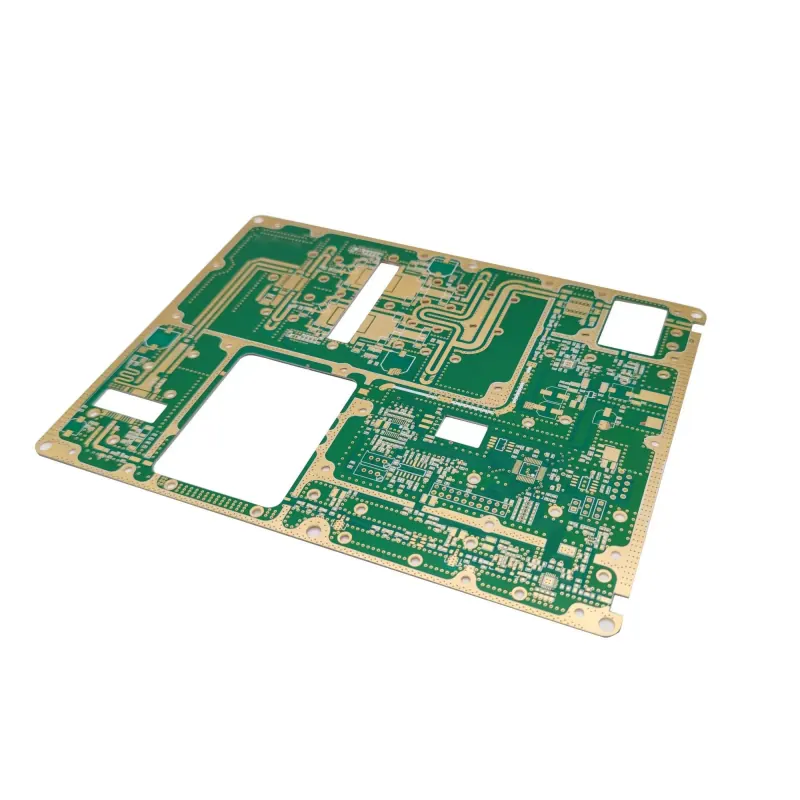
Direct Answer
Quote Rogers 4350B as a manufacturing decision only when RF loss, dielectric repeatability, impedance control, laminate availability, and verification expectations must be reviewed before fabrication; the RFQ should name the construction, dielectric targets, copper assumptions, finish, coupons or test evidence, and allowed alternates.
Engineering Context
Rogers 4350B PCB Manufacturing should answer a specific sourcing or manufacturing decision, not a generic service claim.
Current taxonomy dimensions: material: rogers-4350b, pcbCategory: rf-microwave, surfaceFinish: immersion-silver.
Rogers 4350B PCB Manufacturing is useful only when it changes the engineering or sourcing review. The page should make clear what the buyer must decide before quote, what the manufacturer can verify from the supplied package, and which assumptions would create rework if they are discovered after fabrication or assembly starts.
The key decision is: Quote Rogers 4350B PCBs with RF stackup, sourcing, impedance, finish, and verification assumptions visible. A good RFQ connects that decision to concrete constraints, required handoff files, inspection scope, sourcing boundaries, and test evidence. If a requirement changes stackup, BOM control, fixture access, inspection depth, or shipment documentation, it belongs in the quote package rather than in a late email thread.
The relevant dimensions are material: rogers-4350b, pcbCategory: rf-microwave, surfaceFinish: immersion-silver. Each dimension should affect the quote inputs, manufacturing risks, or quality checks. A material, platform, industry, or capability label is not enough by itself unless it changes the actual review path.
Source-Backed Review Notes
- IPC-4101 frames laminate and prepreg specification boundaries; use it to require exact material language and approved alternates without reproducing paid standard text.
- Rogers official resources support RO4350B material-family context and RF laminate positioning while avoiding copied datasheet tables.
- TI high-speed layout guidance supports stackup, impedance, reference-plane, return-path, and connector-transition review before release.
- Existing OminiPCB material and comparison content defines the split: material properties and selection live on the material page; RFQ readiness and manufacturing handoff live here.
Manufacturing Constraints
- state the exact RO4350B construction, dielectric targets, copper weight, copper foil assumptions, and approved substitution rule before quote
- confirm controlled impedance targets, reference planes, RF launch geometry, coupon requirements, and measurement expectations before fabrication release
- review drill, registration, annular ring, solder mask, and surface finish effects near RF launches instead of treating the laminate as the only RF variable
- separate material availability from electrical acceptance: a stocked laminate still needs stackup approval, DFM review, and acceptance evidence
Quote Inputs
- Provide layer count, dielectric targets, copper weight, impedance model, reference planes, RF launch notes, solder mask assumptions, and whether hybrid FR-4 construction is allowed.
- If the product uses antennas, filters, couplers, or RF connectors, include the design intent and acceptance evidence so the fabricator can separate ordinary fabrication risk from RF performance risk.
- Immersion silver, ENIG, or another finish should be selected for solderability, storage, pad geometry, assembly process, and RF launch behavior; the finish choice should not be implied by the material name.
- Call out connector, edge-launch, solder-mask-defined, and exposed copper requirements in the drawing when they affect RF launch behavior or inspection.
Example Review
A compact RF sensor board using RO4350B should provide the target stackup, dielectric targets, impedance model, RF launch geometry, copper weight, finish preference, coupon or measurement expectation, and whether the rest of the board can remain FR-4. Without those inputs, a supplier can price a laminate but cannot verify the RF manufacturing assumptions or separate sourcing risk from electrical acceptance risk.
Pre-Quote Review
Before requesting Rogers 4350B PCB Manufacturing, compare the design against adjacent options in the same cluster. If another material, platform, finish, or assembly route would use the same quote inputs and risk controls, the project may not need a separate sourcing path.
Source-backed notes should be used as engineering boundaries, not as copied datasheet text, standards excerpts, legal advice, or unsupported certification claims. The RFQ should describe the real product, operating environment, files, and acceptance checks that the manufacturer can verify.
The final quote package should make responsibility clear: design intent and acceptance criteria come from the buyer; DFM, fabrication, assembly, inspection, sourcing feedback, and delivery feasibility come from the manufacturing review.
Tradeoffs
- RO4350B can improve RF margin, but only when the stackup, copper, launch, finish, and acceptance assumptions are visible before quote.
- Hybrid stackups can reduce cost but add lamination, registration, CTE, and impedance-correlation review risk.
- A manufacturing page earns publication only when it changes sourcing, fabrication, impedance, inspection, or approval decisions beyond the material entity page.
- If the RF path is tolerant or short enough for a qualified FR-4-class stackup, a specialty laminate may add sourcing complexity without solving the limiting risk.
- improves RF material control compared with a generic FR-4 callout when loss, phase, or impedance repeatability controls the design
- adds sourcing and stackup discipline because exact laminate construction, copper foil, dielectric thickness, and approved alternates affect lead time
- does not replace RF launch design, return-path control, impedance modeling, or coupon/test planning
- hybrid FR-4 builds can reduce cost but move risk into lamination, CTE, registration, and impedance correlation review
CTA
Request a PCB quote when Gerber, stackup, BOM, quantity, lead time, and inspection requirements are ready for review.