
Direct Answer
The best PCB manufacturers distinguish themselves through three layers of capability: precise fabrication control, proactive design-for-manufacturing support, and a service continuum that extends from raw board to tested assembly. A vendor that only etches copper without validating your Gerber against real process limits will eventually cost you in respins, delayed launches, or latent field failures. The comparison below breaks down what to inspect when evaluating partners, with practical criteria that separate reliable manufacturers from those that merely quote low.
Fabrication Depth and Technical Range
Fabrication is where most evaluations start, and for good reason. A manufacturer's equipment list and process window determine whether your design is buildable at yield. Start by verifying layer count capability, minimum trace and space, controlled impedance tolerance, and aspect ratio limits for plated through-holes. These are not marketing points; they dictate whether your high-reliability PCB will survive thermal cycling or whether your blind and buried vias will plate consistently.
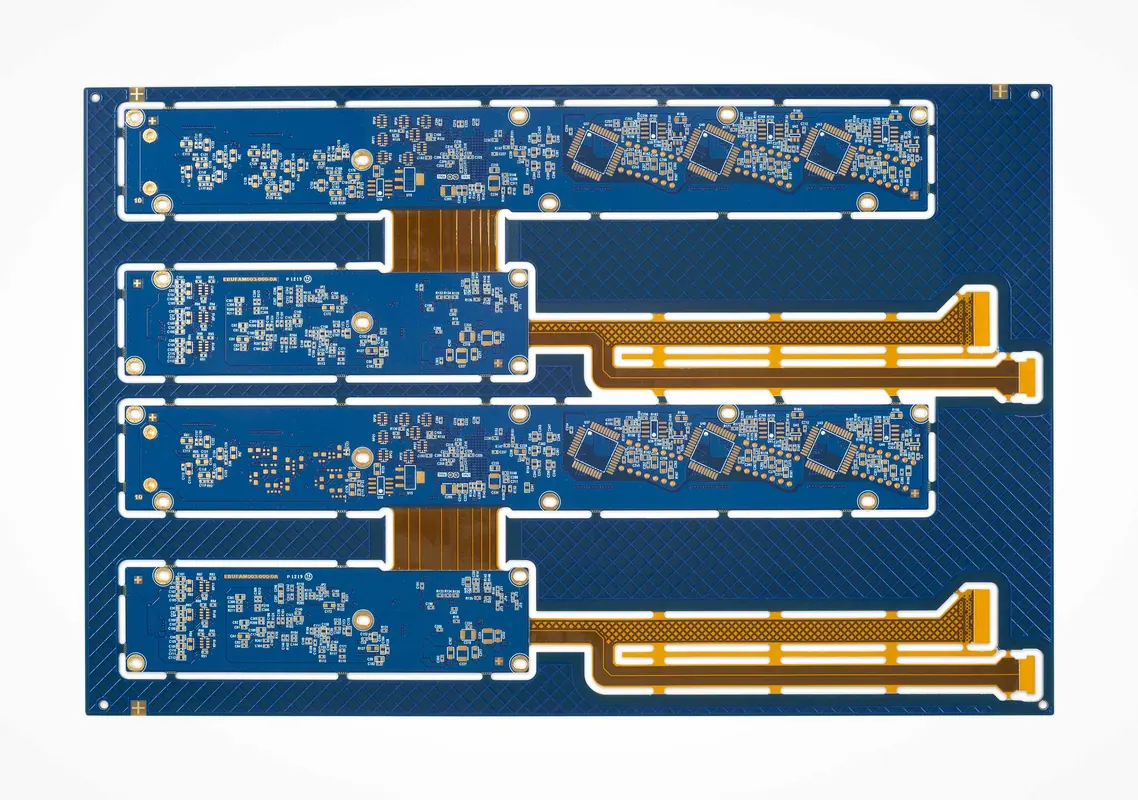
Rigid-flex and flex-rigid capabilities deserve special attention. Not every shop that builds standard FR-4 multilayers can handle polyimide flex layers, coverlay registration, or the adhesive systems that bond rigid and flex sections. If your product requires dynamic bending or tight bend radii, confirm the manufacturer has built similar constructions and can validate bend life through testing rather than assumption.
Surface finish selection also reveals technical maturity. ENIG (electroless nickel immersion gold) remains the default for fine-pitch SMT and long shelf life, but it introduces nickel corrosion risk in harsh environments. OSP (organic solderability preservative) is economical for high-volume consumer boards with rapid assembly turnaround. Immersion tin and immersion silver fill specific gaps. A capable manufacturer recommends finish based on your assembly timeline, component package types, and end-use environment—not simply what is cheapest or in stock.
For stackup engineering, the best partners do not accept your pre-defined layer sequence without question. They simulate impedance, review prepreg and core thickness options, and flag where your target dielectric constant may drift with resin content. You can read more about signal performance in our guide on PCB Stack-Up and Signal Integrity for High-Speed Boards.
DFM Rigor and Pre-Production Validation
Fabrication capability means little if the manufacturer cannot catch design flaws before they become physical defects. DFM—design for manufacturability—is where experienced partners earn their margin. A superficial DFM check flags spacing violations and missing solder mask openings. A rigorous review examines annular ring adequacy under worst-case drill wander, copper weight feasibility for heavy current paths, and thermal relief patterns that balance soldering with electrical performance.
Gerber review is the critical inflection point. Before any CAM work begins, the manufacturer should reconcile your Gerber outputs against your fabrication notes, netlist, and stackup requirements. Discrepancies between Gerber layers and drill files, missing layer pairs in impedance calculations, or undefined via fill requirements all surface here. Catching these early prevents the alternative: discovering a misaligned layer or open net after boards are already in SMT.
Copper weight deserves particular scrutiny in power applications. Heavy copper PCBs—typically 3 oz and above—introduce unique etching challenges, plating uniformity issues, and thermal management concerns. We have documented the most common pitfalls in Common Failures in Heavy Copper PCB and How to Avoid Them in the Design Stage, which covers trace geometry, aspect ratio limits, and thermal cycling failures tied to inadequate copper distribution.
Omini approaches DFM as a collaborative gate rather than a checklist. Our engineering team reviews stackup proposals, surface finish compatibility, and copper weight feasibility before committing to production, aligning fabrication constraints with your reliability targets.
Prototyping Velocity and Production Scalability
Prototype turnaround is often the first interaction with a new manufacturer, but speed without accuracy is a liability. Evaluate prototype services on whether they use the same process chemistry, equipment, and quality systems as production volumes. A prototype built on a quick-turn line with relaxed tolerances teaches you nothing about production yield and may require redesign when you scale.
The transition from prototype to production is where many vendor relationships fracture. A partner with integrated prototyping and volume fabrication can maintain stackup consistency, drill registration, and plating chemistry across builds. This matters enormously for impedance-controlled designs where even minor dielectric thickness shifts alter signal performance. Ask specifically whether the manufacturer reserves dedicated prototype capacity or routes small lots through standard production queues with longer lead times.
For pcb prototyping specifically, verify material availability. Exotic laminates for high-frequency or thermal management applications often carry minimum order quantities and extended procurement times. A manufacturer that quotes 5-day prototype delivery without disclosing material lead time is not being transparent about total project duration.
Assembly Integration and Testing Services
The boundary between PCB fabrication and PCBA assembly is increasingly porous. Manufacturers that offer both reduce handoff friction: the same team that controlled your stackup understands how pad geometry affects solder paste deposition, and the assembly engineers can feed reflow profile concerns back to fabrication.
Inspection coverage separates comprehensive partners from bare-bones vendors. Every manufacturer performs electrical test on bare boards, but assembly-level inspection requires additional investment. AOI (automated optical inspection) catches solder joint defects, component orientation errors, and missing parts. X-ray inspection penetrates QFNs, BGAs, and other hidden-solder-joint packages to reveal voids, bridging, and insufficient fill. Our coverage of AOI and X-Ray Inspection in PCB Assembly explains how these methods combine to protect yield in high-mix, high-reliability production.
Testing depth varies significantly across manufacturers. Some stop at visual and electrical test. Others offer in-circuit test (ICT), flying probe, functional test, and environmental stress screening. Match testing investment to product criticality: a medical device or automotive control module justifies deeper screening than a consumer gadget with short expected life.
Component sourcing is another differentiator. Manufacturers with EMS capabilities and established supplier relationships can procure parts through verified channels, manage obsolescence risk, and buffer against allocation crises. Pure-play fabricators leave this entirely to you or force a second sourcing relationship.
Supply Chain Transparency and Communication
The best manufacturers communicate proactively about constraints rather than promising everything and explaining failures later. Material availability, layer count feasibility, and lead time realism should be discussed during quoting, not after order placement.
Transparency extends to documentation and change control. Request sample quality reports, process control data, and how the manufacturer handles engineering change orders. A partner that cannot produce consistent process capability data or track revision history introduces risk into regulated industries.
Geographic and logistical considerations also matter. For teams based in North America or Europe, a China-based manufacturing supplier should make engineering communication, factory handoff, documentation, and shipping assumptions clear despite time zone differences. Omini's RFQ path is designed to connect customer engineering questions with factory review and delivery planning.
Evaluating Total Cost Beyond Unit Price
Unit price per square inch or per layer count is an incomplete comparison metric. Total cost includes DFM iteration, prototype respins, yield loss, field failures, and schedule delays. A manufacturer quoting 15% higher on bare boards but eliminating two respins through better DFM review delivers lower total cost of ownership.
Request detailed quotes that break out tooling, test, and engineering review fees. Some manufacturers subsidize apparent board cost with hidden NRE charges. Others include DFM and CAM review in standard pricing, reflecting confidence that early investment reduces downstream problems.
Lead time premiums also deserve scrutiny. Express prototyping often carries surcharges that become unsustainable at volume. Understand the manufacturer's standard versus accelerated process, and whether acceleration compromises quality controls.
Making the Selection
Selecting among PCB manufacturers ultimately requires matching their demonstrated capabilities to your product's specific technical and commercial requirements. A manufacturer excelling in high-volume consumer boards may lack the process control for aerospace reliability standards. A specialty shop in rigid-flex may not offer cost-competitive volume production.
Visit facilities when possible, or at minimum request virtual process reviews. Inspect cleanliness, equipment maintenance, and whether quality data is collected automatically or transcribed manually. These operational details predict consistency better than sales presentations.
For additional selection criteria specific to China-based manufacturing, our guide on Choosing the Right PCB Manufacturer in China: Key Factors to Consider covers audit protocols, intellectual property protections, and communication infrastructure.
DFM discipline remains the strongest predictor of long-term manufacturing success. Partners that invest in early design review, flagging issues like those covered in Common DFM Issues and How to Avoid Them in PCB Design, protect your schedule and reputation more effectively than those competing solely on price.
Field Note
After reviewing dozens of manufacturing partnerships over product generations, the pattern is consistent: the manufacturers that earn repeat business are those that say no early—when a stackup is unbuildable, a surface finish mismatched, or a timeline unrealistic—rather than accepting every requirement and failing later. The best comparison you can make is not between quoted prices but between the depth of technical conversation each manufacturer initiates before taking your order. That conversation, and the engineering honesty within it, determines whether your next build ships on time or spends weeks in debug.